The SaaS Monetization Strategy That Took Us from $0 to $10K MRR (Without a Huge Launch)
Building a great SaaS product is hard.
But figuring out how to actually make money from it?
That’s often where startups hit a wall.
A lot of early-stage SaaS founders focus on features, speed, and UI.
But without a clear and adaptable SaaS monetization strategy, growth stalls—no matter how good your product is.
In this post, I’m sharing the exact monetization strategy we used to go from zero to $10K in Monthly Recurring Revenue (MRR),
without going viral, getting funded, or running ads.
Step 1: Don’t start with tiers—start with outcomes
Most founders default to creating Free, Pro, and Team plans.
But we flipped it.
We asked:
“What problem are we solving, and what result does the customer care about?”
Instead of just limiting features, we aligned plans with outcomes.
Example:
Plan A: Automates 5 workflows → Saves 10 hrs/week
Plan B: Automates 15 workflows + analytics → Saves 25 hrs/week
Plan C: Unlimited + integrations + audit support
This gave customers a reason to upgrade beyond just “more features.”
And it gave us a framework to price based on value, not just cost.
This mindset shift was core to our SaaS monetization strategy.
Step 2: Make the free plan narrow but powerful
Freemium is still powerful—but only when done intentionally.
We designed our free plan to:
Solve one clear use case extremely well
Show a taste of deeper capabilities
Make it stupid-easy to upgrade (1 click, in-app)
What we didn’t do:
Unlimited usage
Broad access to multiple modules
Email-gating everything
Our free users converted at 7.6%—higher than industry average—because they experienced real ROI within days.
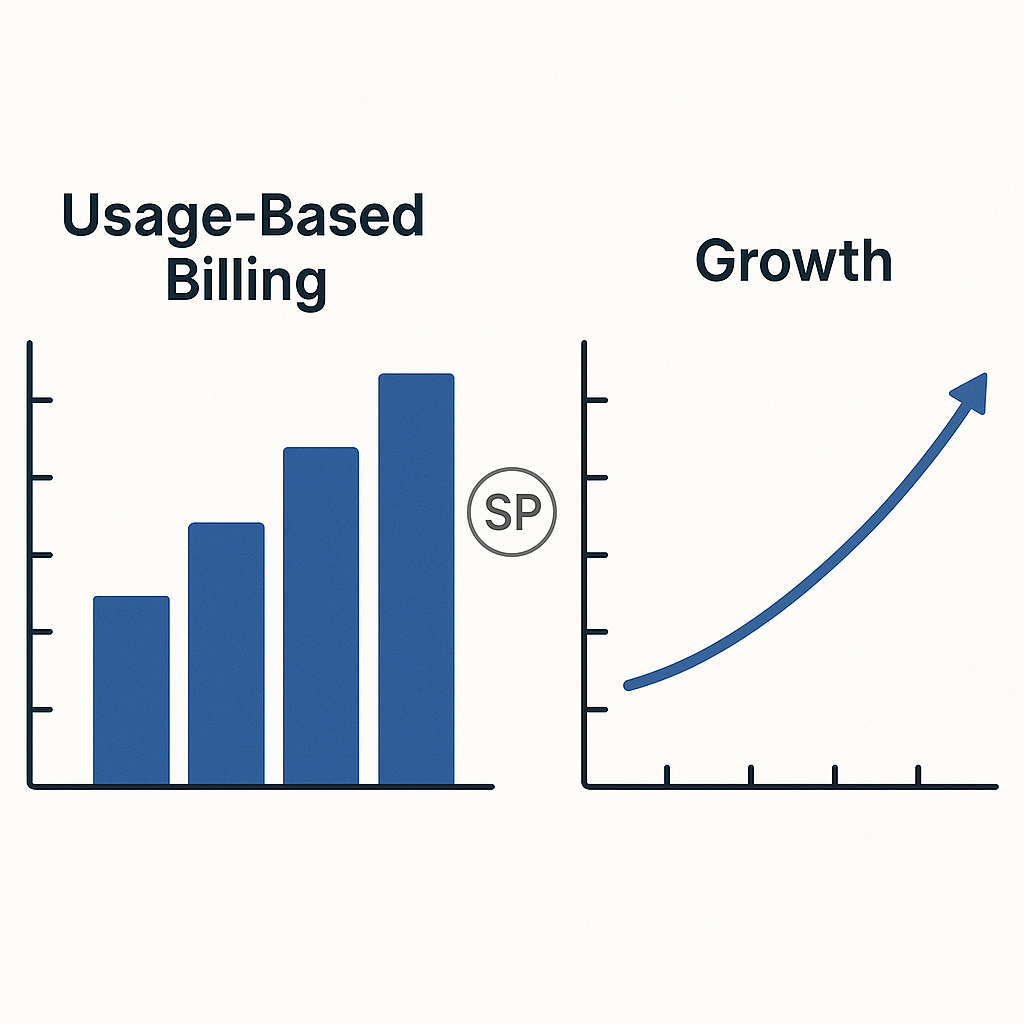
Step 3: Usage-based pricing for growing teams
As soon as our customers started scaling usage,
they didn’t want a higher plan—they wanted flexibility.
So we introduced usage-based pricing:
Base price: $29/month
Plus $0.30 per automated task beyond the base 500
Why it worked:
Startups could begin affordably
Enterprises saw it as fair and scalable
Revenue grew automatically with product usage
This became one of the most stable components of our SaaS monetization strategy.
Step 4: Paywalls aren’t evil—if they’re honest
We didn’t try to “hide” our paywalls.
Instead, we designed them to educate.
When a user hit a feature outside their plan, we showed:
What they just tried to do
What value it unlocks
What it costs and why
Testimonials from similar users
It was respectful, not salesy.
And our conversion rate on feature-triggered upgrades increased by 23%.
Don’t fear the paywall.
Fear making your pricing feel manipulative.
Step 5: Anchor pricing to value, not complexity
One of the smartest things we did was remove “per seat” pricing.
Why?
Teams hated calculating costs
It discouraged collaboration
It added friction to trial > adoption
We shifted to flat rates + usage scale, and instantly saw:
Faster decision-making
More active users per workspace
Higher retention
Sometimes, simplifying pricing leads to bigger revenue—because buyers trust what they understand.
This is a key lesson in any modern SaaS monetization strategy.

Bonus: Lifetime deal ≠ suicide (if scoped correctly)
We tested a $199 lifetime deal with strict limits:
1 workspace
3 integrations
No premium support
It brought in 700+ users and seeded our affiliate program.
The key? We didn’t give away the farm.
We sold speed and simplicity, not “everything forever.”
Done right, LTDs can validate demand and create user advocates—without cannibalizing MRR.
Monetization isn’t about squeezing users.
It’s about creating a clear, fair path from value to revenue.
Whether you’re launching or scaling,
your SaaS monetization strategy should evolve with your product and customers—
not just your ambition.
Beyond Pricing: What We Learned Scaling a Monetization Strategy from $10K to $50K MRR
Once our initial SaaS monetization strategy started working, we assumed it would just keep scaling.
Spoiler: it didn’t—not automatically.
The next phase was harder, more nuanced, and surprisingly humbling.
Here are five real lessons we learned while pushing from $10K to $50K MRR.
1. Your monetization strategy has to evolve every 6–9 months
What worked at $10K won’t carry you to $30K.
Why?
Customer personas change
Expectations rise
Support and onboarding become real costs
We had to adjust our pricing twice in one year.
Each time, we lost a few early adopters—but increased ARPU by 22%.
It taught us: pricing isn’t one-and-done. It’s a living system.
2. Add-ons > feature creep
As we built out new tools, the temptation was to bundle everything into existing tiers.
But that bloated our UX and made onboarding harder.
So we shifted to:
Lean core plans
Modular add-ons (analytics pack, API pack, branding tools)
This way, users paid only for what they valued.
Our expansion revenue tripled in 4 months.
Add-ons aren’t upsells.
They’re a way to respect user needs while still growing revenue.
3. B2B requires custom pathways, not just pricing pages
At $10K MRR, most of our customers were solo founders or small teams.
But once we started serving agencies and mid-sized B2Bs, everything changed.
They wanted:
Net-30 billing
Security docs
Team training
White-label options
Our website didn’t answer any of these.
We added a sales-assisted flow and closed $18K in deals we would’ve missed.
Scaling monetization isn’t just about numbers—it’s about adapting to decision-making processes.
4. The silent churn was hiding in "happy users"
Our NPS was solid.
Engagement looked fine.
But revenue wasn’t growing in proportion to our user base.
Why?
Users were “happy” but underutilizing
Most weren’t aware of power features
Some didn’t even know we had a Pro plan
We created a quarterly usage review + nudge campaign and saw:
14% conversion from free to paid
6% bump in upgrade rates
9% reduction in silent churn
It reminded us: users don’t convert because they're happy.
They convert when they see and act on additional value.
5. Monetization isn't everything—retention is
Chasing revenue without protecting retention is a leaky bucket.
At $10K, churn was manageable.
At $50K, every lost customer hit harder.
We invested in:
Better onboarding
Milestone-based lifecycle emails
Dedicated customer success for top users
These things don’t directly increase revenue—but they protect it.
And that’s just as important.
Scaling a SaaS monetization strategy isn’t about getting louder.
It’s about getting sharper—refining what’s already working and knowing when to evolve.
You don’t need to change your pricing every month.
But you do need to revisit, question, and listen to the numbers.
Because what got you here won’t get you there.