Monetizing Global SaaS Tools with API-Driven Microservices
SaaS tools have become an essential part of modern workflows, but they’re not just for boosting productivity—they can also be turned into revenue-generating assets. By combining SaaS platforms with microservices and APIs, you can create scalable, automated income streams that work around the clock. Here’s how to transform SaaS tools into a profitable system^-^

Start by identifying a SaaS tool with a strong user base and an open API.
Popular platforms like Notion, Slack, or Airtable allow developers and entrepreneurs to build integrations,
templates, or extensions that solve specific problems.
Look for gaps in the market—areas where users are doing repetitive tasks manually—and design a solution that automates or simplifies them.
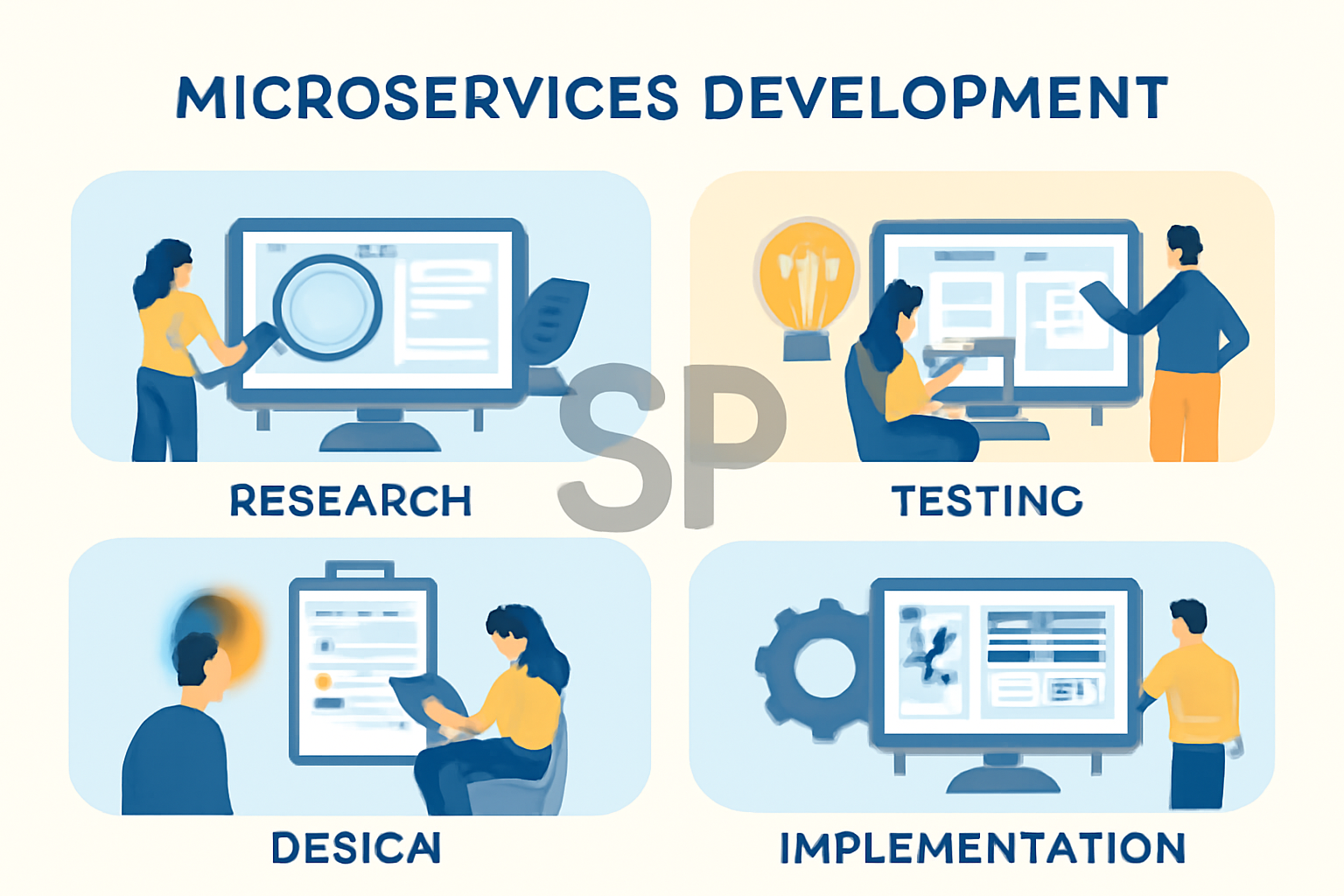
Once you’ve found your niche, build a microservice that plugs into the SaaS tool.
This doesn’t have to be overly complex; in fact,
lightweight services often perform better because they’re faster to develop,
easier to maintain, and cheaper to host. Use the API to pull and push data seamlessly,
so your service feels like a natural extension of the platform.
Monetization can take several forms. You could sell access to your microservice as a subscription,
charge a one-time fee for premium features, or offer it free with optional paid add-ons. Many developers also use marketplaces provided by SaaS platforms to reach a larger audience without heavy marketing costs.

Automation is where the real power lies. By setting up recurring billing,
automated user onboarding, and integrated analytics,
you can keep your service running with minimal hands-on work. Combine this with strategic partnerships—such as collaborating with influencers or niche communities—and your customer base can grow steadily without massive ad spend.
The final step is to track performance and iterate. Use analytics to understand how users interact with your service, what features they use most, and where they drop off. Continuous improvement not only retains customers but also increases lifetime value.
Q: Do I need to be a developer to build a SaaS-based microservice?
A: Not necessarily—no-code platforms and API integration tools make it possible for non-developers to create functional products.
Q: How much should I charge for my service?
A: Test different pricing models to see what works best for your audience and product.
⚠ Common Mistakes & Fixes
Overcomplicating the product → Start small and refine based on user feedback.
Ignoring customer support → Even automated services need human touchpoints.
Neglecting analytics → Data-driven decisions lead to better growth.
Think of SaaS monetization as building a “digital asset portfolio.” The more microservices you create and automate, the more resilient and diversified your income becomes^-^
The SaaS industry has exploded in recent years, transforming how individuals and businesses operate. But for those with an entrepreneurial mindset, SaaS tools are more than just productivity enhancers—they’re potential revenue streams. By combining the right SaaS platform with microservices and smart API integrations, you can build an income-generating system that works for you 24/7^-^
The first step is identifying the right SaaS tool to build upon. You don’t have to reinvent the wheel—many established platforms already have large user bases and active marketplaces. What you’re looking for is a tool with an open API and a community that’s hungry for solutions. This could be anything from a CRM system that needs better reporting to a project management app that could benefit from custom automations. Spend some time in user forums, social media groups, and product feedback boards. The gaps you discover there can be the foundation of your product idea.
Once you know the problem you want to solve, focus on building a lightweight microservice. You don’t need to launch with a massive feature set—start with the core functionality that solves the specific pain point. APIs make it possible to pull and push data seamlessly between your service and the main SaaS platform, so your tool feels like a native feature rather than an awkward add-on. The simpler your product, the faster you can get it to market, test it with real users, and start generating revenue.

When it comes to monetization, flexibility is key. Subscription models work well for services that deliver ongoing value, but you might also experiment with one-time purchases, pay-per-use pricing, or a freemium model with paid upgrades. Many SaaS platforms offer built-in marketplaces where you can list your service, which can dramatically reduce your marketing overhead. These marketplaces already have targeted traffic—users actively searching for solutions—which means your conversion rates can be higher than traditional advertising.
Automation should be built into your service from day one. That means automating billing, onboarding, customer communications, and even feedback collection. Tools like Stripe, Paddle, or Gumroad can handle recurring payments, while onboarding flows can be automated with email sequences or in-app tutorials. The less manual work your service requires, the more scalable it becomes, allowing you to serve hundreds or thousands of customers without significantly increasing your workload.
Partnerships can accelerate your growth. Collaborating with influencers or niche communities in your target market can bring in a steady stream of new users. Offering affiliate programs or co-branded versions of your microservice can also help you tap into audiences you wouldn’t reach on your own. The key is to create win-win situations where your partners benefit just as much as you do.
Analytics should guide every decision you make after launch. Track user behavior to see which features are most popular, where users are dropping off, and what’s driving conversions. This data will help you prioritize updates and refine your marketing strategy. A small tweak, like simplifying a signup form or improving load times, can have a surprisingly big impact on revenue.
Building and monetizing SaaS-based microservices isn’t about chasing the next big startup dream—it’s about creating a portfolio of digital assets that each contribute to your income. The beauty of this approach is that once a service is launched and automated, it can continue earning with minimal upkeep. Over time, you can diversify by creating multiple microservices across different platforms, reducing your risk and increasing your earning potential.
In the end, success in SaaS monetization comes from solving real problems, keeping your product lean and user-friendly, and setting up systems that let the business run without constant intervention. If you approach it strategically, each microservice you build becomes another piece of your long-term financial foundation—one that keeps generating revenue while you focus on the next opportunity^^